Hyundai Engine Repair & Engine Overhaul in Hyderabad
Hyundai engine diagnosis comes first
A Hyundai engine problem is diagnosed before an overhaul is ever suggested. Metre Per Second - Premium Car Service & Repair in Gajularamaram, Hyderabad starts with the owner's account, service history, stored codes, live data and mechanical checks where the symptom warrants them, telling real internal wear apart from turbo, injection, cooling, timing or electronic causes. A written estimate is prepared and customer approval taken before any major engine work is started.
Hyundai's popular India engines include the Kappa 1.0 T-GDi and 1.2, the Gamma 1.4 and 1.6, the Nu 2.0, the newer Smartstream units and the U2 1.5 CRDi diesel. These are widely owned across Hyderabad, so a rough idle, a warning light or an overheating note can turn up in daily commuting for reasons that are frequently serviceable rather than internal — an ignition part, a cooling item, a sensor or, on turbo variants, the charge system. At Metre Per Second - Premium Car Service & Repair on KPHB Road, Gajularamaram, the scope follows the inspection: findings and a written estimate come first, and internal engine work only when the evidence supports it.
Hyundai engine problems and symptoms worth checking
Rough idle, misfire or a shudder at low speed
On Kappa, Gamma and Smartstream petrols, a coil or spark fault, an injector, carbon on direct-injection units, an air leak or a sensor can all feel like the same rough running. A logged misfire code narrows the search but does not confirm internal engine damage.
Overheating or coolant loss
A hose, radiator, water pump, thermostat or head-gasket concern can each cause a Hyundai to run hot or lose coolant. In Hyderabad's summer this is checked promptly, since continuing to drive an overheating engine can turn a modest cooling repair into internal damage.
Warning light, limp mode or hesitation
A check-engine light on a Hyundai can stem from sensors, fuel pressure, ignition, the throttle system or actual mechanical faults. On the 1.0 T-GDi, boost-related codes are common. Fault-code review narrows the cause before any parts are recommended.
Oil consumption or a blue haze
Oil reaching combustion may come from ring or valve-seal wear, but a crankcase-breather fault or, on turbo variants, a turbo seal produces similar smoke. Compression and leak-down measurements help separate an internal cause from an external one before any overhaul talk.
Diesel smoke or loss of pulling power
On the U2 1.5 CRDi, black smoke or reduced power often traces to the turbo, intake, EGR, DPF or an injector rather than internal wear. These systems are assessed alongside compression before power loss is attributed to the engine internals themselves.
Knocking, ticking or a cold-start rattle
Timing chain or belt condition, valve-train clearance, lubrication pressure and injector operation can each create a noise. The pattern, the engine temperature when it occurs and scan data are all weighed before internal mechanical wear is concluded on a Hyundai.
Oil-pressure warning or difficult starting
Oil grade, level, the pump and internal condition affect pressure, while hard starting can involve the battery, fuel pressure, sensors or a mechanical fault. An oil-pressure warning is a stop-and-inspect symptom, because low pressure can damage bearings quickly.
Possible causes — not every symptom is internal engine damage
Not every Hyundai engine symptom is an internal problem, and many are resolved with a smaller, correctly targeted repair. Metre Per Second - Premium Car Service & Repair checks the surrounding systems first:
- Turbo and charge-air faults on 1.0 T-GDi and 1.5 CRDi — smoke, oil use and power loss that mimic internal wear
- Injector, fuel-pressure or ignition faults — misfires, rough idle and hard starting
- Cooling-system concerns — overheating and coolant loss that resemble a head-gasket problem
- EGR or DPF issues on the U2 diesel — smoke, limp mode and warning lights
- Sensor, wiring, throttle or engine-management faults — warning lights and hesitation without mechanical damage
Hyundai engine diagnosis
- Listening to the owner's description of the concern and reviewing the car's service history
- Checking visible items first — fluid levels and condition, leaks, hoses, wiring and connectors
- Reading stored fault codes and comparing live sensor data against expected values
- Testing the surrounding systems (cooling, intake, fuel, turbocharging, emissions) where the symptom points to them
- Measuring compression, cylinder leak-down or oil pressure when the evidence justifies opening that line of investigation
- Explaining the findings in plain language, with a written estimate prepared before any chargeable repair is approved
Hyundai engine technologies considered during diagnosis
Kappa petrol family, including 1.0 T-GDi
The Kappa 1.2 and turbocharged 1.0 T-GDi use direct or port injection with variable valve timing. On the T-GDi, boost control, charge-air and intake condition can imitate internal weakness, so these are assessed before compression testing is opened up.
Gamma, Nu and Smartstream petrols
The Gamma 1.4/1.6, Nu 2.0 and Smartstream units use variable valve timing and chain or belt-driven setups. Ignition, injection, timing and sensor faults are common sources of engine-like symptoms and are checked before any internal work is proposed.
U2 1.5 CRDi common-rail diesel
The U2 diesel uses common-rail injection, turbocharging and after-treatment. Injector condition, EGR, the DPF and boost control directly affect smoke and power, so these systems are examined before any internal diesel work is considered.
Engine-control fault memory and live data
Stored codes, freeze-frame information and live values narrow an investigation across Hyundai's petrol and diesel systems. These are always considered alongside physical and mechanical tests, so a recommendation rests on measured evidence rather than codes alone.
Hyundai model and engine-family guide
The table below covers the Hyundai models most often seen in Hyderabad. Each row is only a starting point; the real scope always follows diagnosis and an approved estimate.
| Model | Engine / fuel | Relevant technology | Common symptoms | Diagnostic checks | Possible repair |
|---|---|---|---|---|---|
| Creta | Petrol and U2 diesel variants by model year | Kappa T-GDi, Smartstream petrol or common-rail diesel | Warning lights, limp mode, smoke, misfire or power loss | History review, fault memory, charge-air and injector checks where indicated | Targeted system repair or internal work only when inspection confirms it |
| Verna | Petrol and diesel variants by model year | Kappa T-GDi or Smartstream petrol, or common-rail diesel | Misfire, hesitation, smoke, noise or reduced acceleration | Scan data, ignition, fuel and cooling checks, compression where relevant | Repair scope follows the established cause and approved estimate |
| Venue | Kappa petrol and U2 diesel variants by model year | 1.0 T-GDi turbo petrol, 1.2 petrol or 1.5 CRDi diesel | Warning lights, rough idle, smoke, overheating or power loss | Fault-code review, turbo and cooling checks, tests where indicated | External-system repair, component repair or internal work based on findings |
| Tucson | Nu petrol and diesel variants by model year | Nu 2.0 petrol or common-rail diesel with turbocharging | Power loss, noise, coolant loss, misfire or warning lights | Diagnostic data, cooling and charge-air checks, compression where relevant | Component repair, approved internal repair or replacement assessment |
| Grand i10 | Kappa petrol variants by model year | Kappa 1.2 petrol with variable valve timing | Misfire, hesitation, warning lights, noise or oil use | History, scan data, ignition and fuel checks where indicated | Targeted system repair or internal work only when evidence supports it |
Hyundai engine repair, overhaul or replacement
When an overhaul may — or may not — be needed
An overhaul may be appropriate where inspection confirms:
- Compression readings that stay low because of internal mechanical wear
- Measured damage to pistons, rings, cylinder walls, bearings, crankshaft or valve gear
- Internal damage confirmed after severe overheating or a lubrication failure
- A seized engine or another proven internal mechanical failure
A large share of Hyundai cars that arrive with a suspected engine failure actually need something smaller — a cooling repair, an injector, a timing component, a turbocharger or an electronic fix. For that reason Metre Per Second - Premium Car Service & Repair does not quote an engine overhaul over the phone: the car is inspected first, the evidence is documented, and internal engine work is proposed only when the inspection genuinely supports it.
Targeted system repair
Chosen when the fault sits outside the engine internals — for example in the cooling, fuel, ignition, intake, timing, turbocharging or engine-management systems.
Cylinder-head (top-end) work
Chosen when inspection traces the problem to the cylinder head, valves, valve seals or the sealing surfaces above the block.
Lower-engine (bottom-end) work
Chosen only when measurement confirms a problem in the block assembly — bearings, crankshaft, pistons or cylinder walls.
Full engine overhaul
Chosen when the inspection shows wear or damage broad enough that rebuilding the engine as a whole is the sensible, approved scope.
Replacement assessment
Weighed against rebuilding only after the engine's condition, parts availability and the overall estimate are known.
Hyundai engine repair pricing
Engine repair cost depends on what the inspection finds: the engine family, the extent of internal damage, which parts are needed, whether machining is required and the repair scope the customer approves. Metre Per Second - Premium Car Service & Repair prepares a written, itemised estimate after diagnosis; no meaningful engine-repair price can be quoted from a symptom description alone.
How long diagnosis takes depends on the fault — straightforward concerns resolve quickly, while complex intermittent faults need longer investigation. The repair duration then follows from the approved scope, parts availability, any machine-shop work and final testing — a realistic completion window is shared once those factors are known, rather than promised in advance.
The Hyundai engine overhaul process — if approved
- The engine is removed from the car only if the approved scope requires it
- The affected assembly is stripped, cleaned and laid out for inspection
- Bores, crankshaft journals, head flatness and running clearances are measured against specification
- Pistons, rings, bearings, valves, timing components and the oil and cooling circuits are checked item by item
- Machining and parts replacement happen only where the measurements call for them
- The engine is reassembled to torque specification, refilled, coded or calibrated where the car requires it, then verified with diagnostics and a road test
Engine components that may be inspected
Depending on the findings and the approved repair scope, inspection and measurement can cover:
- Pistons and piston rings
- Cylinder bores and liners
- Cylinder head, valves and valve seals
- Crankshaft and main / big-end bearings
- Camshafts and valve train
- Timing chain or belt, guides and tensioners
- Oil pump and lubrication circuit
- Water pump and cooling circuit
- Gaskets, seals and sealing surfaces
- Injectors and fuel delivery
- Turbocharger and charge-air plumbing
Inside the workshop
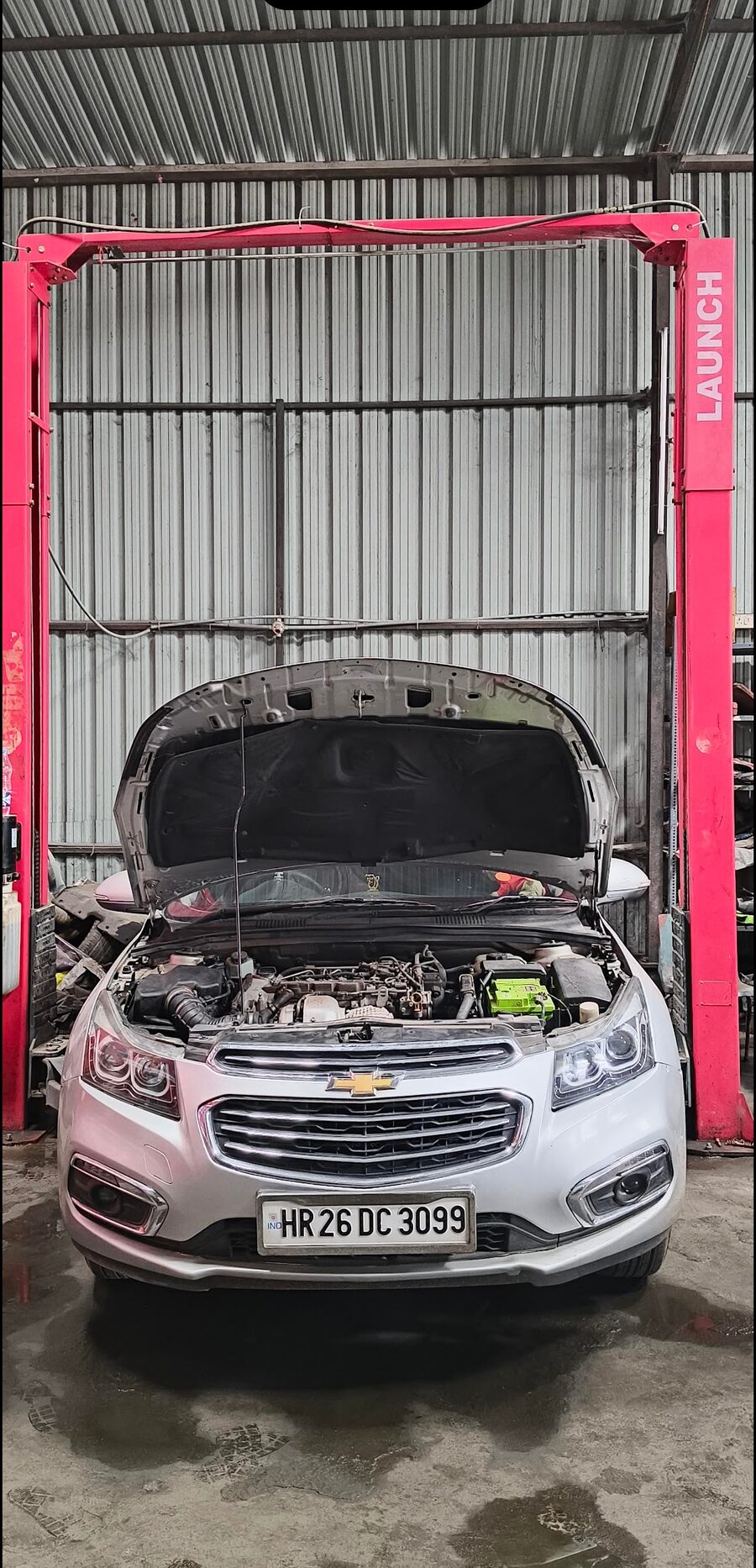
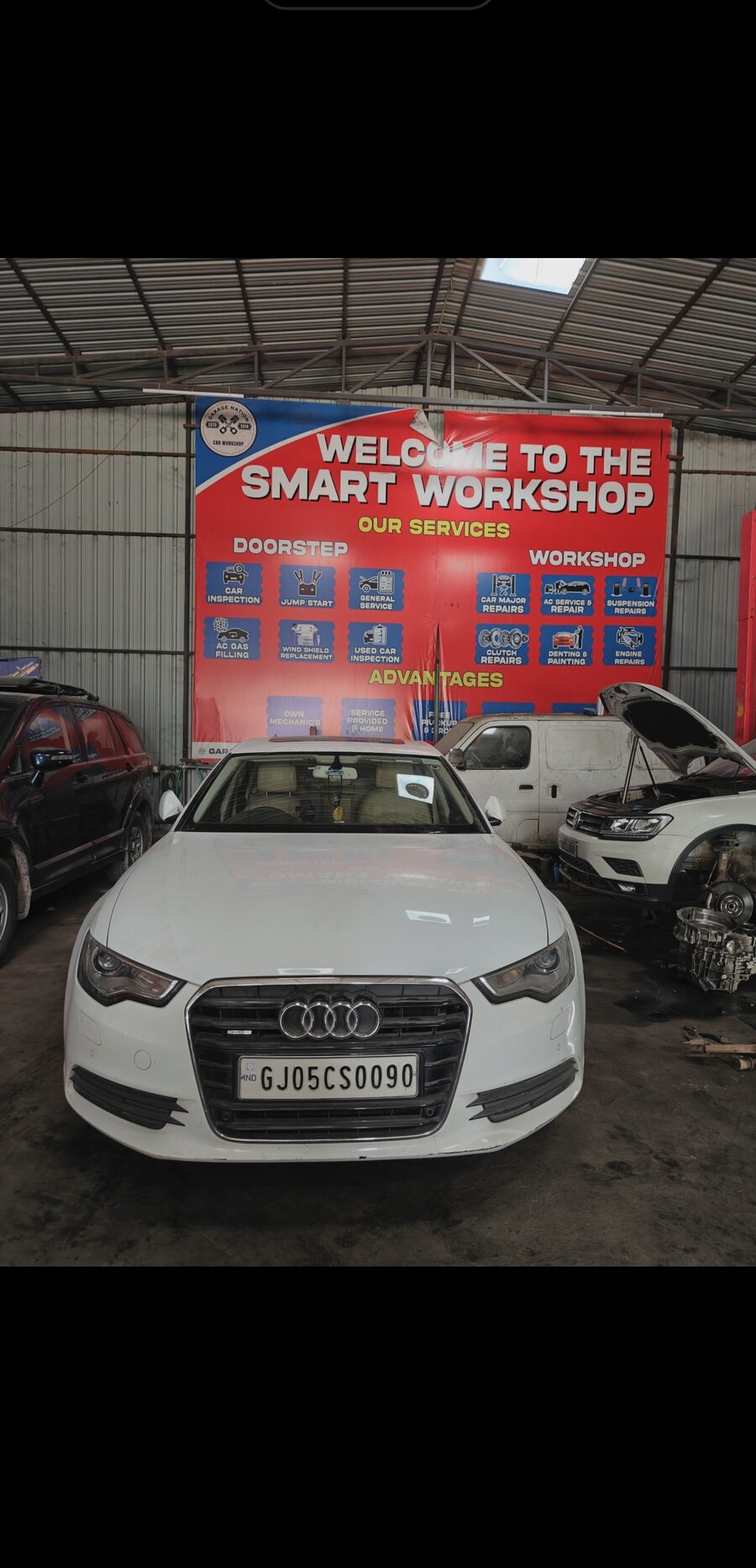
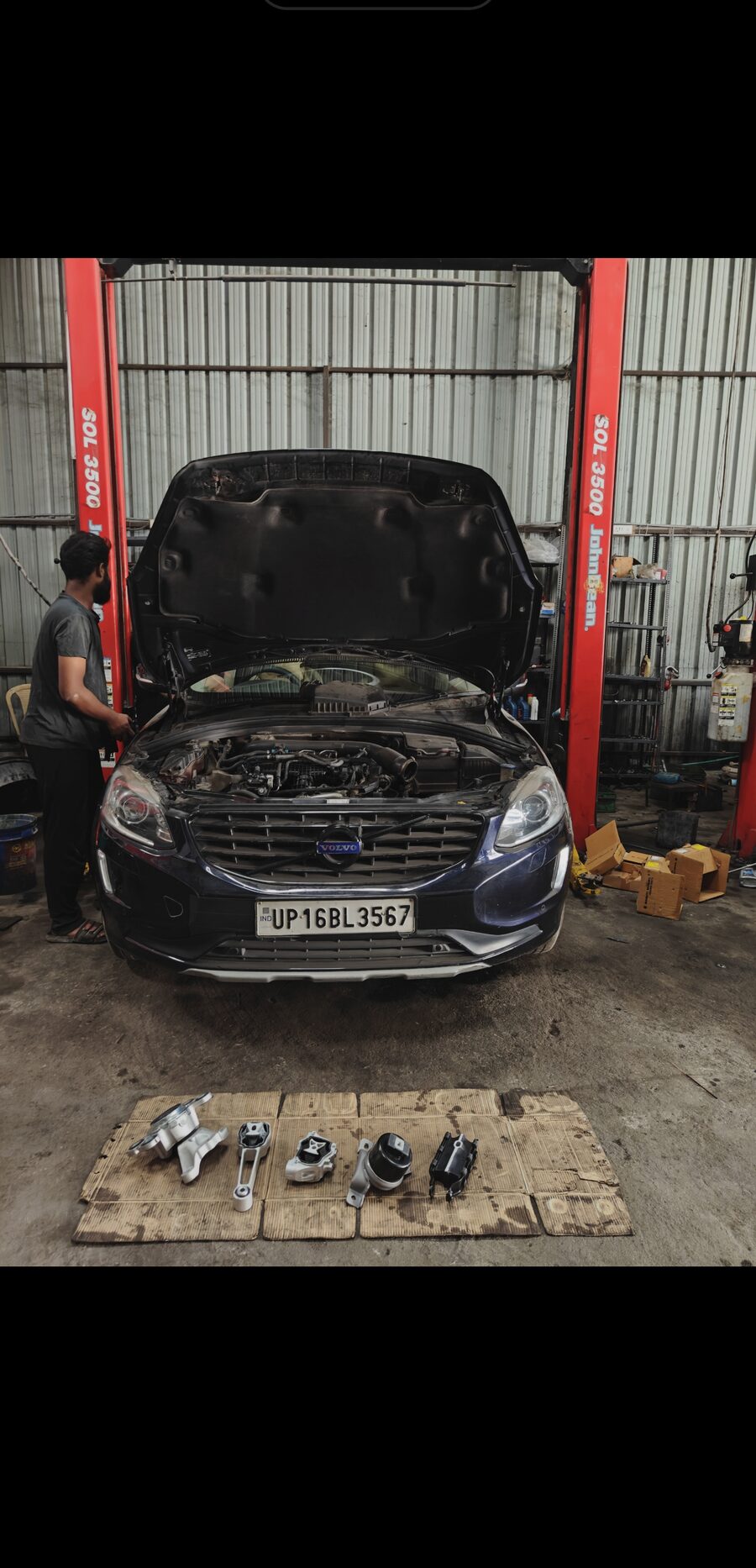
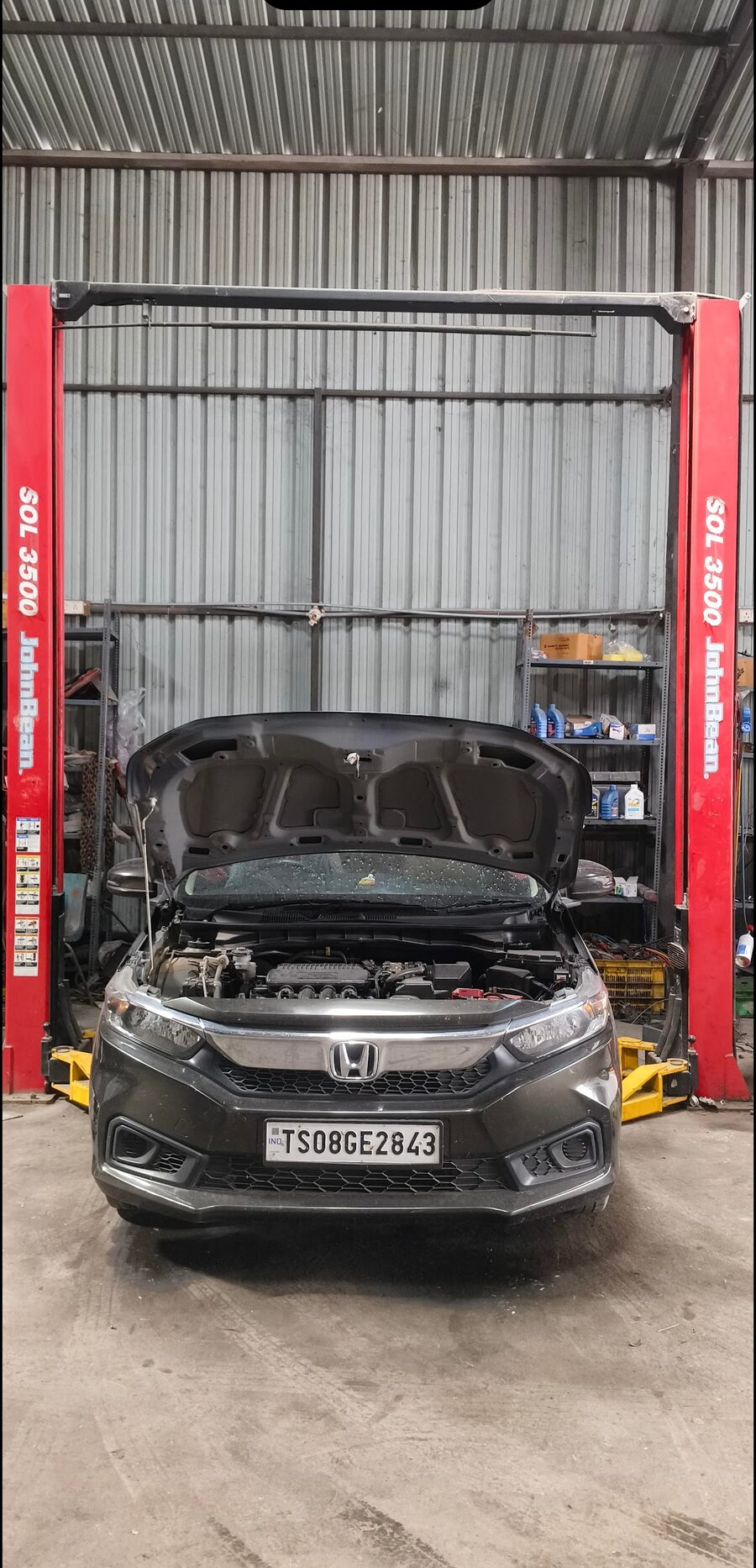
Real photographs from the Metre Per Second - Premium Car Service & Repair workshop in Gajularamaram, Hyderabad.

The customer repair process, step by step
Step 1 — Vehicle arrival
The car comes to the Gajularamaram workshop on KPHB Road; any collection arrangement is agreed case by case for the specific car and location.
Step 2 — Diagnosis
The concern is investigated with history review, inspection, scan data and mechanical tests as the symptom demands; complex intermittent faults need longer investigation than straightforward ones.
Step 3 — Findings and written estimate
What was found, what it means and what it should cost are documented and explained before anything chargeable is proposed.
Step 4 — Customer approval
No chargeable work starts until the customer has understood the findings and approved the estimate.
Step 5 — Parts and repair
Parts are sourced after approval — availability varies by engine family — and the approved repair or overhaul is then carried out.
Step 6 — Testing and handover
Leak checks, warning-light verification, temperature behaviour and a road test come before delivery; the completed work and replaced parts are explained at handover, and the agreed warranty terms are recorded.
Warranty and additional findings
Engine work at Metre Per Second - Premium Car Service & Repair carries a 1-year workmanship warranty, with repair and parts coverage as set out in the warranty terms agreed at handover. Covered concerns raised during the period are assessed against those terms; the warranty is not unlimited and does not extend to unrelated future faults.
Dismantling occasionally reveals damage that no external inspection could have shown. When that happens the extra finding is documented, photographed where practical and explained — and the customer decides whether the additional work proceeds before it is charged.
Hyundai engine repair in Hyderabad — where to find the workshop
Metre Per Second - Premium Car Service & Repair operates from Plot No. M-8, Mahadevpuram, KPHB Road, Gajularamaram, Hyderabad, Telangana 500055 — convenient to KPHB, Kukatpally, Nizampet, Bachupally and nearby areas.
Hyundai engine repair FAQs
My Creta shows a check-engine light — does the engine need major work?
Usually not from a warning light alone. On a Creta the cause can be a sensor, fuel pressure, ignition, the throttle system or a turbo-related code. Metre Per Second - Premium Car Service & Repair reviews the fault memory and tests the relevant systems before any internal engine work is even discussed.
Does oil consumption on my Hyundai mean the engine is worn out?
Not on its own. Oil can reach combustion through ring or valve-seal wear, but a breather fault or a turbo seal on the T-GDi produces the same haze. Metre Per Second - Premium Car Service & Repair uses compression and leak-down testing to separate an internal cause from an external one first.
My 1.5 CRDi diesel has lost power — is it an engine problem?
Power loss on the U2 diesel often relates to the turbo, intake, EGR, DPF or an injector rather than internal wear. Metre Per Second - Premium Car Service & Repair reviews fault memory and tests those systems so the actual cause is confirmed before any internal engine work is proposed.
Can you diagnose Hyundai engine faults without dealer tools?
Metre Per Second - Premium Car Service & Repair reads stored codes, freeze-frame and live data and combines these with physical and mechanical checks across Hyundai petrol and diesel engines. Scan output is used to narrow the investigation rather than as standalone proof, so any recommendation rests on measured evidence.
How much will a Hyundai engine repair cost?
The cost depends on the engine family, the extent of any damage, the parts required, whether machining is needed and the approved scope. Metre Per Second - Premium Car Service & Repair prepares a written, itemised estimate after diagnosis; a meaningful figure cannot be given from a symptom description over the phone.
My Hyundai keeps overheating — is the head gasket gone?
Overheating can come from a hose, radiator, water pump, thermostat or a head-gasket concern. Metre Per Second - Premium Car Service & Repair checks the cooling circuit first, because continuing to drive an overheating Hyundai can turn a straightforward cooling repair into internal damage.
Is Hyundai engine work covered by a warranty?
Engine work at Metre Per Second - Premium Car Service & Repair carries a 1-year workmanship warranty, with coverage as set out in the terms agreed at handover. Concerns raised during the period are assessed against those terms; the warranty is not unlimited and does not extend to unrelated future faults.